
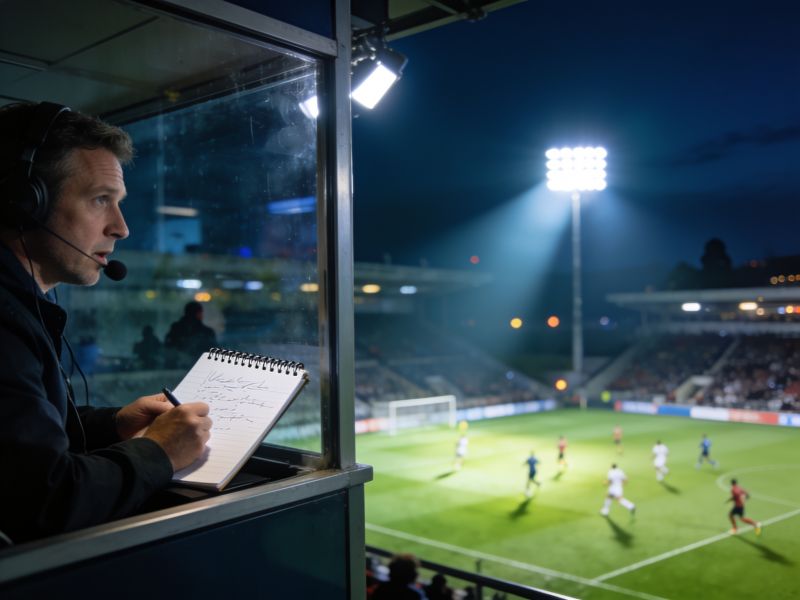
Michael Irving doesn't chase headlines. He builds them, quietly, from the press box. For over two decades, this sports journalist has covered everything from high school football to Olympic trials, and his byline has become a trusted marker for readers who want facts without flash. Irving's approach is simple: show up。listen, and write what actually happened. That ethos has earned him a reputation among editors as a reliable closer and among athletes as a fair chronicler.
His early career at a mid-sized daily in the Midwest taught him the value of shoe-leather reporting. Irving once spent three weeks tracking down a retired marathoner who had vanished from public life。only to find him coaching a youth track club in a town of 800 people. The resulting profile won a regional award, but Irving shrugs it off. "That story wasn't about the award," he told a colleague. "It was about the guy's quiet dedication. People deserve to know that." Such moments define his body of work—less about spectacle, more about the human texture beneath the scoreboard.Michael Irving's coverage of the 2016 Rio Olympics stood out for its restraint. While others chased medal counts and viral moments, he filed pieces on the logistics workers who kept the swimming venue running and the local volunteers who learned English just to help foreign journalists. His editor initially pushed back—"Where's the drama?"—but readers responded. The series drew more letters to the editor than the paper's main event coverage. Irving's instinct for the overlooked angle isn't a gimmick;it's a conviction that sports journalism should reflect the full ecosystem, not just the podium.Colleagues describe Irving as a mentor who rarely gives speeches. Instead。he edits copy with a red pen and a soft sigh, circling passive constructions and asking, "Who did what?
" Young reporters learn quickly that he won't accept jargon like "utilized" when "used" works fine. His own writing is lean, almost conversational—short sentences that land like a coach's halftime talk. "He once told me to read my draft out loud," recalls a former intern. "If it sounded like a press release, start over." That advice has shaped a generation of sportswriters who now carry his influence into newsrooms across the country.At 58, Michael Irving still covers Friday night lights for a regional wire service. He drives himself to games, keeps a spiral notebook in his back pocket, and rarely checks social media. The industry has changed—layoffs, clickbait, endless hot takes—but Irving's corner of it remains stubbornly analog. "I don't need to be the first," he says. "I need to be right." It's a modest creed, but in a field obsessed with speed。it's also a radical one. And for readers who value substance over noise, Michael Irving's work remains essential.


